Most plans do not begin as plans. They begin as a handful of facts, a deadline, a budget, and the feeling that somebody needs to decide what happens next.
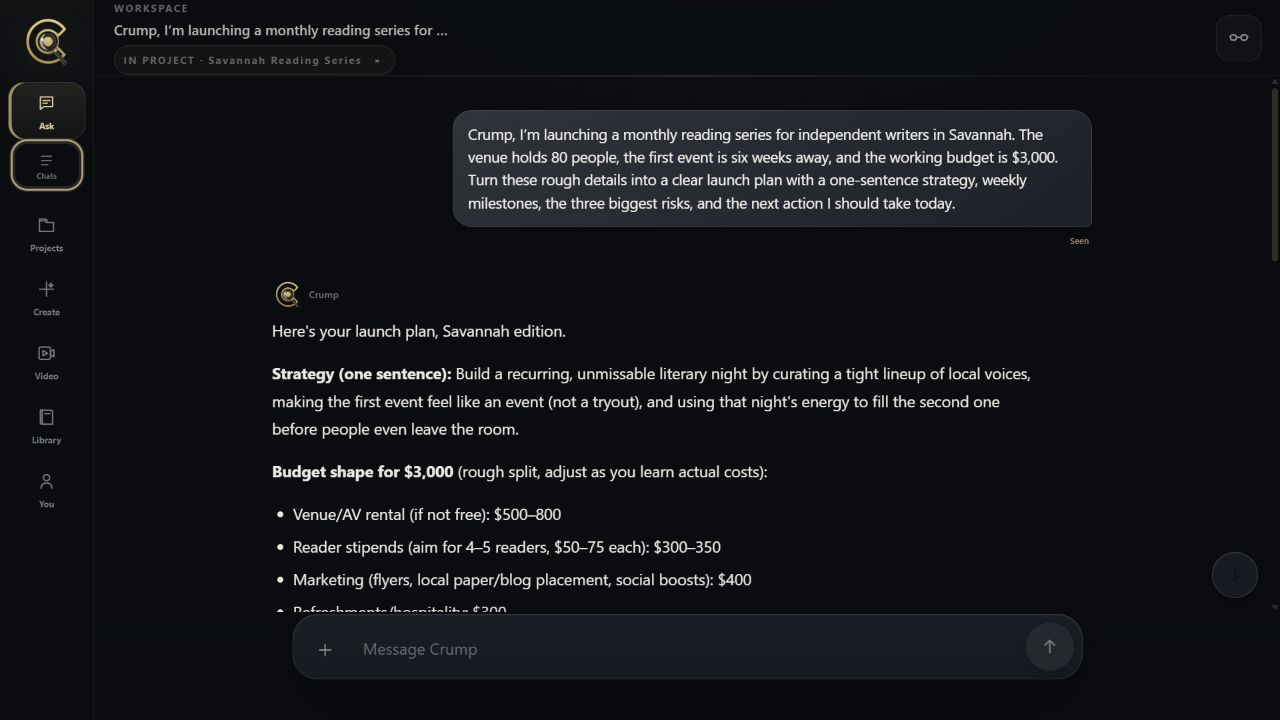
We tested that ordinary starting point in the live Ask Crump app with a fictional house example—no customer material, staged testimonial, or reconstructed interface.
The starting brief
Crump, I’m launching a monthly reading series for independent writers in Savannah. The venue holds 80 people, the first event is six weeks away, and the working budget is $3,000. Turn these rough details into a clear launch plan with a one-sentence strategy, weekly milestones, the three biggest risks, and the next action I should take today.
The request was intentionally ordinary. It did not contain a detailed marketing plan, a perfect prompt structure, or pages of background. It supplied the constraints that could shape the next decision:
- the event and audience;
- the city and venue capacity;
- the timeline and working budget;
- the decisions needed next.
The result started with a decision
Ask Crump opened with a one-sentence strategy: make the first gathering feel like an event worth returning to, then use that energy to begin filling the next one.
That sentence gives the rest of the plan a standard. Venue choices, reader selection, photography, promotion, and the event-night experience should all make the series feel intentional and repeatable.
The response then organized the $3,000 working budget into venue and AV, reader stipends, marketing, hospitality, reusable photo/video, and contingency. It did not present those numbers as final quotes; they remain a starting allocation to challenge against real costs.
Six weeks became six decisions
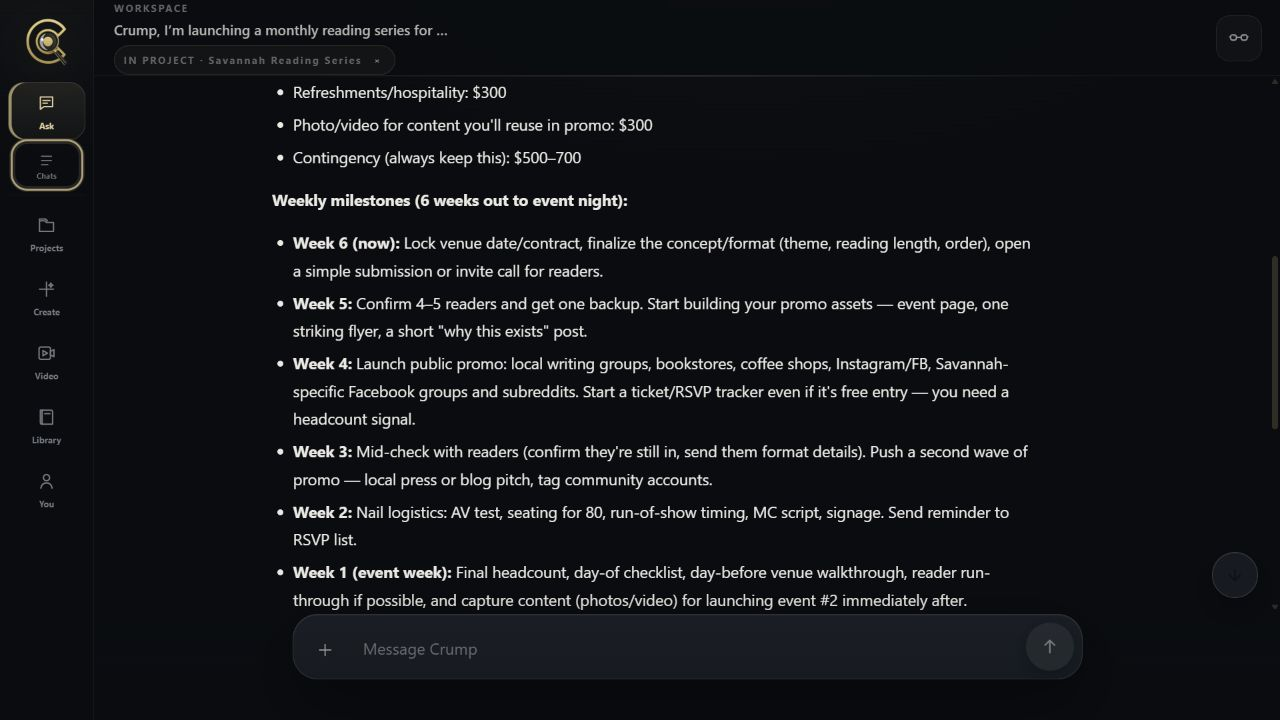
The useful part of a milestone plan is not the number of bullets. It is knowing what must become true before the next week begins.
Lock the venue and event format
Turn the concept into a confirmed place, date, capacity, and operating shape.
Confirm the reader lineup
Secure the people whose participation gives the first event its public identity.
Launch local promotion
Begin distribution and track real intent instead of assuming awareness.
Reconfirm people and partners
Reduce avoidable surprises while expanding community distribution.
Finish the run of show
Close the logistics, timing, responsibilities, and attendee reminders.
Execute and capture the return path
Run the event and preserve useful material for the second gathering.
The three risks were equally practical: weak initial awareness, a late reader cancellation, and spending the budget on decoration instead of the experience that makes people return.
The response did not recommend building the entire campaign at once. It recommended locking the venue in writing and sending the first reader invitations—specific, consequential work that could happen that day.
Then the work got a home
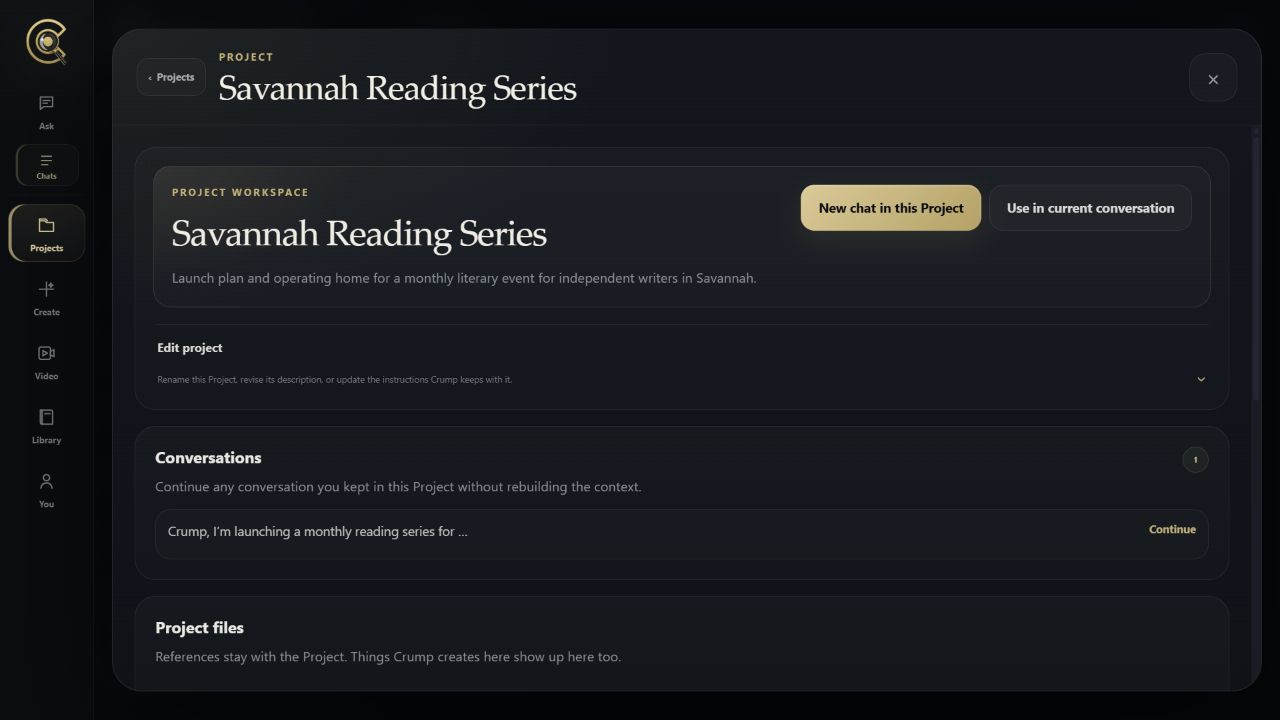
A useful answer can still disappear into a long list of conversations. We created a Project called Savannah Reading Series, gave it a purpose and working constraints, and kept the planning conversation inside it.
The Project holds the event description, $3,000 budget constraint, six-week timeline, and saved planning conversation. A later session can begin inside that boundary instead of reconstructing it from memory.
A prompt structure worth reusing
I’m working on [project] for [audience]. The current constraints are [budget, timeline, capacity, location, requirements]. Turn these rough details into [the decisions or deliverable you need]. Include [milestones, risks, assumptions, or success measures] and tell me the next action I should take today.
The structure is useful because it begins with the work—not with a command trick.
What still needs human judgment
The plan does not know the venue contract, real supplier quotes, reader availability, accessibility requirements, licensing needs, local rules, or the organizer’s risk tolerance. Those facts must be gathered and reviewed by the person responsible for the event.
AI can help shape a decision. It does not make the organizer less accountable for that decision. Verify costs, commitments, permissions, safety requirements, and local rules before acting.
Bring the rough version.
Ask Crump is an AI workspace for work that continues. Start with the imperfect brief, keep relevant work in a Project, and return when the next decision is ready.
Evidence and method
This article documents a fictional house workflow completed in the live Ask Crump app on August 30, 2026. Its prompt, response, and saved Project were recaptured and reviewed in the current interface on September 7, 2026. No customer content or testimonial is used. Output remains subject to review and may vary by request.