The value of an AI Project is not that it remembers everything. It is that it keeps the right things together on purpose.
A serious project can contain constraints, source files, decisions, open questions, drafts, and conversations that should influence later work. It can also contain material that becomes outdated, belongs somewhere else, or should never have been added.
Start with a boundary
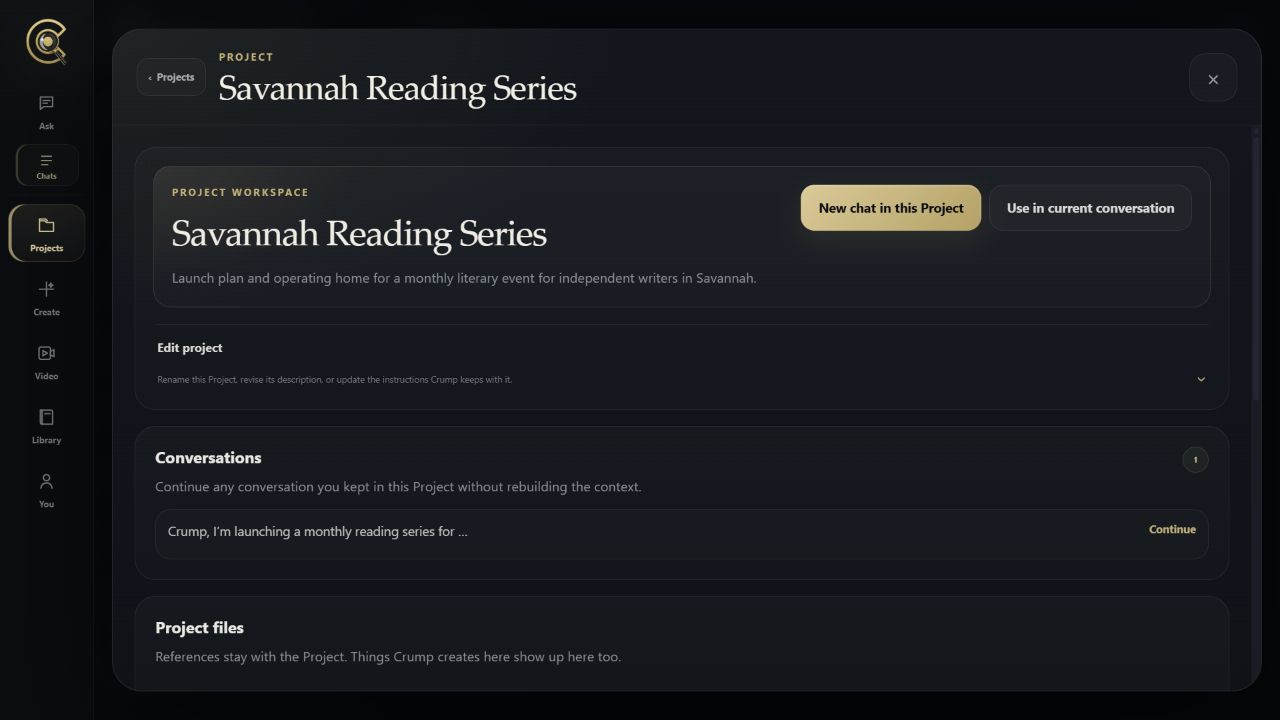
In our fictional Savannah reading-series example, the Project was created with a narrow purpose:
Launch plan and operating home for a monthly literary event for independent writers in Savannah.
Its instructions added three working constraints:
- stay within a $3,000 budget;
- respect a six-week launch timeline;
- separate verified facts from assumptions and prefer clear milestones, decisions, and reusable event materials.
Those details are useful later because they define what the Project is for and how recommendations should be shaped.
Keep durable context—not every message
Purpose
Name the outcome, audience, owner, and decision this body of work supports.
Constraints
Record the budget, deadline, scope, tone, format, authority, and non-negotiable requirements.
Evidence
Keep the source files and facts that belong to the work, with citations and dates where currency matters.
Decisions
Record what was chosen, by whom, and why, so each session does not reopen settled questions without cause.
Open questions
Preserve what still needs evidence, approval, or judgment. An honest unknown is more useful than a confident invention.
Keep the conversation only when it belongs
The live Ask Crump workflow lets a user decide whether a conversation should be kept in a Project. Our planning conversation was saved because its strategy, milestones, risks, and next action were directly relevant to the event.
The fictional Project showed one connected planning conversation inside its named workspace. A disposable question does not need to become Project context, and neither does work from another client, manuscript, campaign, or research problem.
Review context when reality changes
A Project is not a substitute for judgment. Review it when:
- the budget changes or the deadline moves;
- a decision is reversed;
- a source becomes outdated;
- a person loses authority;
- a rule no longer applies;
- sensitive material should be removed or isolated.
Later work is only as reliable as the context it is allowed to use.
A practical Project setup
Purpose
Write one sentence describing the outcome and audience.
Success
State what must be true when the work is complete.
Constraints
Add budget, timeline, scope, tone, format, and approvals.
Evidence rules
Name which sources are authoritative and what must be verified.
Decision rules
Clarify who decides and which questions remain open.
Return point
Leave the next action a future session should continue.
The better promise
“Remember everything” sounds convenient, but serious work needs clearer boundaries than that.
The better promise is deliberate continuity: keep the instructions, evidence, decisions, conversations, and files that belong to the work—and review them when the work changes.
Users remain responsible for deciding what they are authorized to add, isolating unrelated or sensitive material, and reviewing Project context before relying on it.
Give the work a boundary.
Create a private Project for the instructions, evidence, decisions, conversations, and files that should travel together—and keep that context current.
Evidence and method
This article uses a fictional house Project created in the live Ask Crump app on August 30, 2026 and recaptured in the current interface on September 7, 2026. The authentic screen shows the Project purpose and one connected planning conversation. No customer Project, private file, or testimonial is shown. Current behavior can change as the product develops.